
Well, after receiving my new receiver Eton E5, I finally decided that this morning would be my first attempt to pick up the Voice of Korea (a broadcast from North Korea). Unfortunately, that meant getting up at 5 AM (1300 UTC), but I didn’t mind too much, as I really want to hear some heavy duty, old school communist propaganda.
Anyways, the only signal I could pick up here in San Francisco was at 9335. I was able to pick it up (faint and muffled), but it was completely unlistenable due to some interfence from something (another frequency? eletrical?). Basically, it was a periodic tone of increasing static, that would repeat ever couple of seconds. Here is a clip of it:
Since I started back with my Shortwave my amount of sleep has gone decidedly down. Thus, last night, after a quick nap, I didn’t have too much time to listen to the radio, but did have a chance to pick up a pair of Cuban stations.
The first was really good, because it was a pretty strong signal, and I didn’t have to strain to hear it. I was really excited about the second, Radio Rebelde. The signal was really weak at first, but after adjusting the antena and fine tuning it, I was finally able to hear it. It took me a while to confirm the station (because it was in Spanish), but I was finally able to near the top of the hour. The cool thing was that according to the EIBI frequency charts, this was a broadcast targeting the Caribbean (and not the Western Coast of the US. Btw, apparently Radio Rebelde was founded by Che Guevara.
I received my Eton E5 shortwave receiver today (woot!). I took some pictures of the unboxing, and posted them on my Flickr account.
UPDATE: I moved the images off of Flickr (see below).
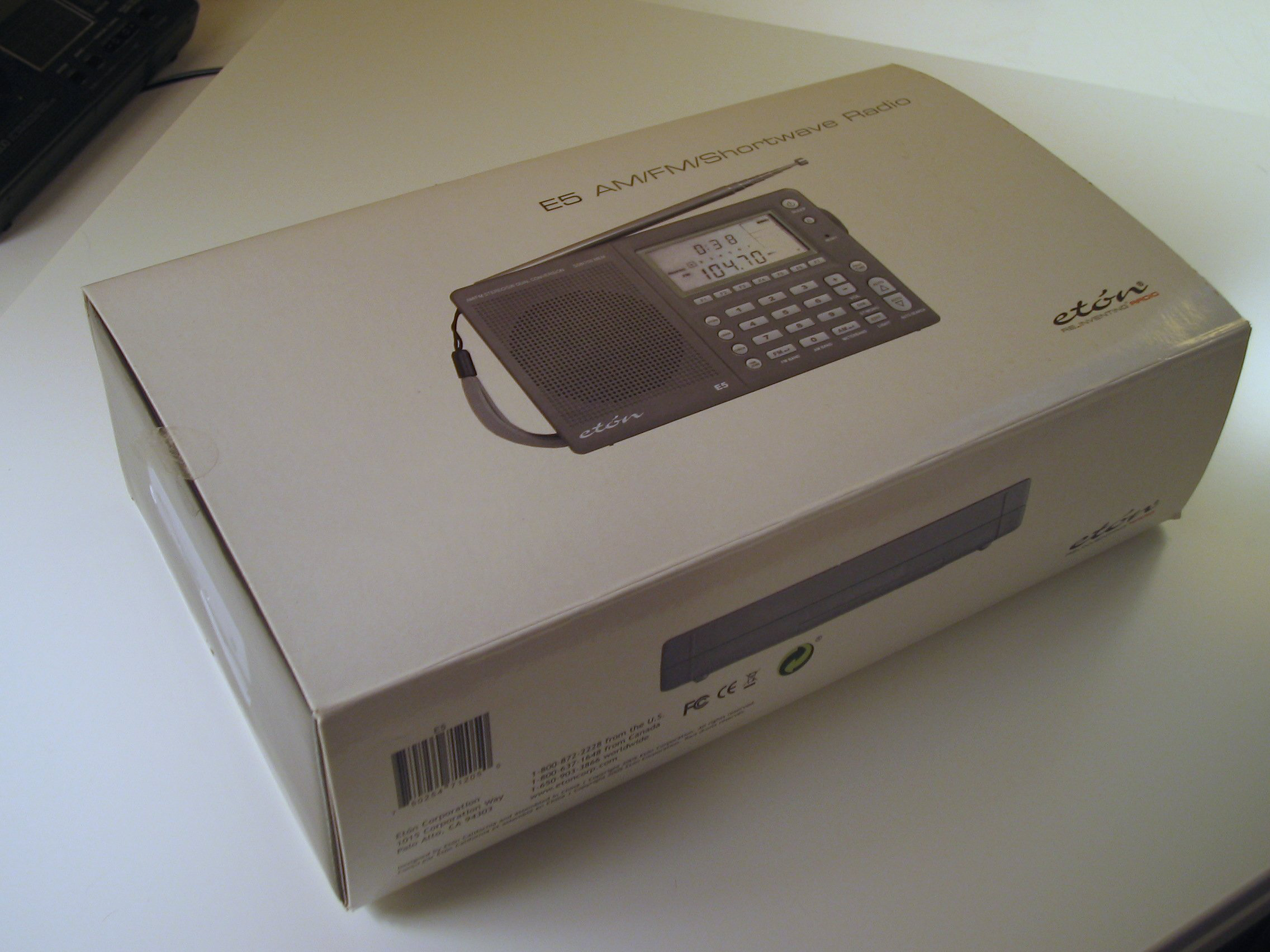
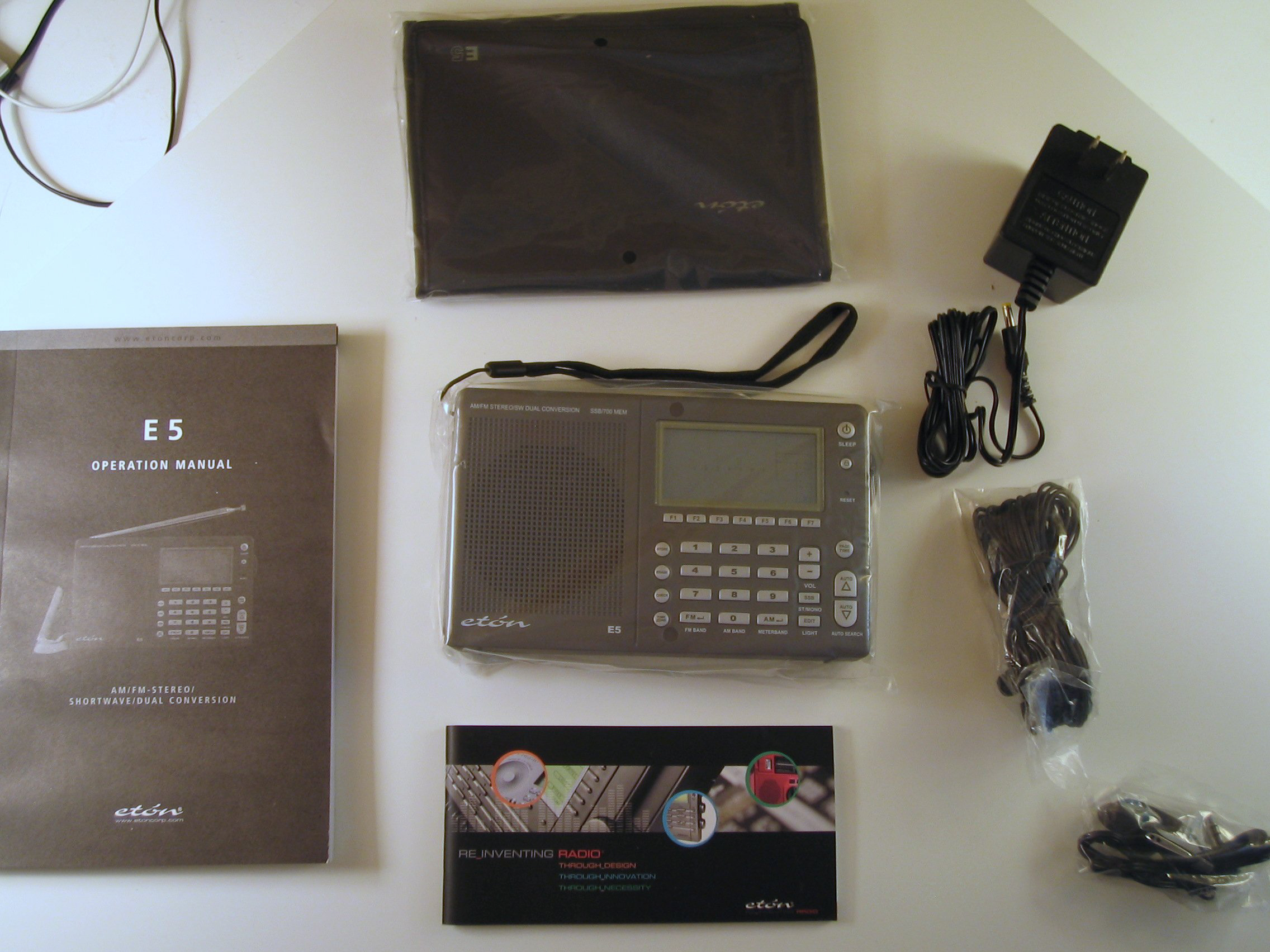
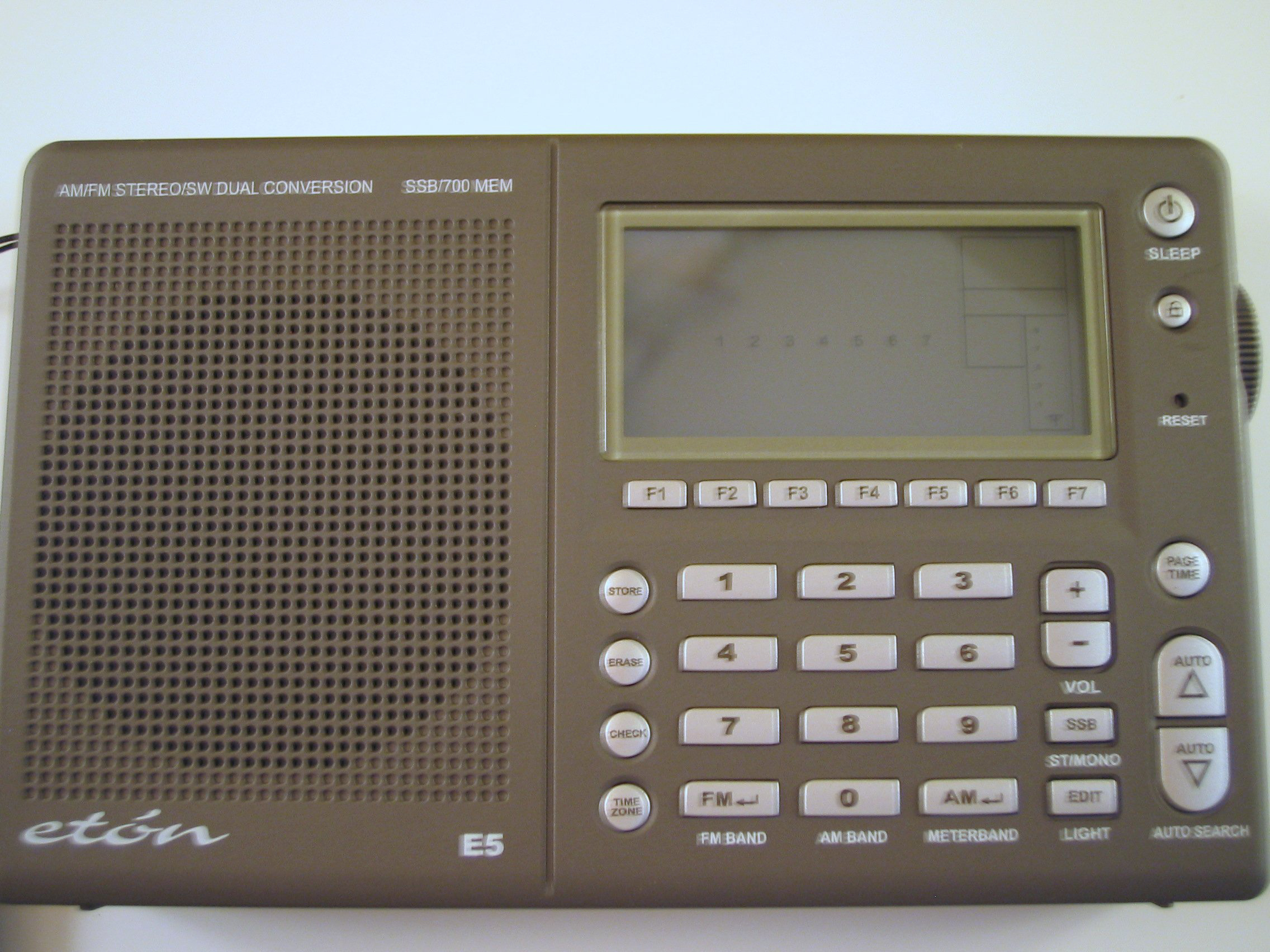
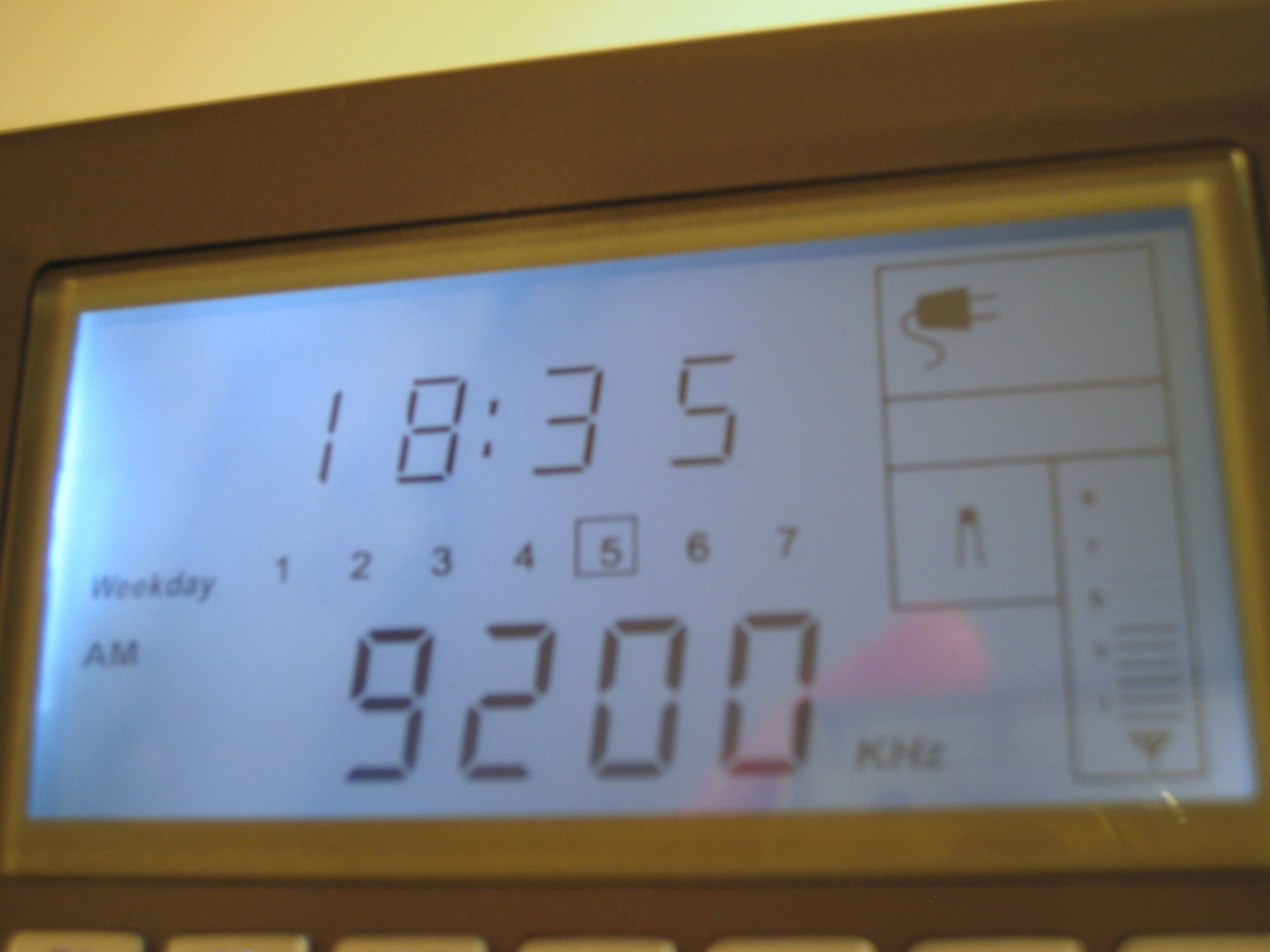
Sorry about the quality. It looks like my white balance was off on my camera.
I have been trying to find a good template of a QSL Log page, that I could print out to make it easier to keep track of logging the stations that I pick up on shortwave. I know that there are plenty of good computer programs that handle this, but 1) my receiver is not near my computer, so I have to use pen and paper, 2) one of the reasons I am playing around with shortwave is to get away from my computer.
I have been playing around with my Shortwave receiver the past couple of days, and have been having fun finding and listening to stations. However, I haven’t been able to get any real strong signals in, except for gospel broadcasts from the U.S. So today, I built a simple antenna consisting of about 25 Feet of single stand wire soldered to an alligator clip. I laid the wired out my window, across my deck, and up the hill, and then clipped it to the whip antenna of my receiver. Wow! I was blown away with how much such a simple antenna improved my reception. I am getting a lot more stations tonight, at much stronger signals (I have been listening to Radio Netherlands all night, and it sounds like a local AM station).
Before I first went to Europe about 10 years ago, I got my first shortwave radio (a SONY ICF-SW7600). I used it to keep up with the news (mostly BBC), and listen to broadcasts from countries with in Europe. Well, I haven’t really messed around with it since then, but over the past couple of days I have been on holiday, and getting a little bored (there is only so much XBOX 360 one can play). So, I started looking into Shortwave radios again, and pulled out my trusty old Sony to see what I could pick up in San Francisco.
Michael Arrington of TechCrunch posted a 37 minute podcast with Kevin Lynch over the weekend that focuses on Apollo. This is a very good listen, and gives some insight into some of the thoughts around Apollo from the general tech community.
You can listen to the entire podcast here.
The Register has posted an interview with Mark Anders of Adobe. The article touches on a number of topics, including Flex, WPF, and Apollo. In particular, this quote from Mark caught my eye:
If you look at what Microsoft is doing with WPF, they say it’s really about rich Internet applications but actually, I don’t think it is, because I think rich Internet applications are not about Windows only. I think the Internet is about a multitude of machines and you do not always know what they are.
Just a quick FYI, but I am out of the office the next two weeks taking some vacation. Also, my mail client (Mac Mail), has decided to crash every time I open it which makes it a little difficult to check email.
So, the sum of the two is that I probably won’t have access to (or be checking) email until early January 2007.
I have just uploaded a 10 minute video interview / discussion with Christian Cantrell of the Apollo team. Christian talks about his role on the Apollo team, and shows some Flex / HTML applications that he has been working on.
You can find more information on Apollo here.
FYI, this is our first video, so we are still working out some of the kinks.